
Penguin books: The paperback revolution that changed publishing


Introduction
How did Penguin Books start?
As the legend goes, it all began in the autumn of 1934. Publisher Allen Lane was on his way back from visiting author Agatha Christie and her husband when he came up with the concept of what would become Penguin Books.
While Allen was waiting in Exeter Station for a connecting train back to London, he searched the station's book and magazine stalls for something to read. He was not impressed by what was on offer: extremely expensive hardbacks, glossy magazines and shoddy reprints of second-rate novels.
It was in this moment that he had the idea to reprint the best fiction and non-fiction as cheap paperback editions. On the train back, and without a book, he is said to have figured out how to make that work. And so, Penguin Books was born.
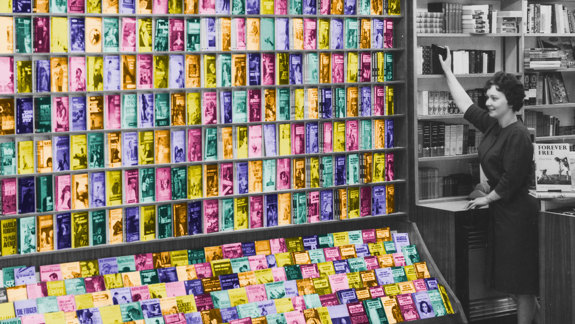
Less than a year later, in July 1935, the first 10 Penguin paperbacks went on sale. They were an immediate success. Three million of these books were sold in two months from both bookshops and non-book retailers, including Woolworths.
Today Penguin Books is a British cultural institution, and an iconic part of the intellectual life of the nation.
Making friends with Agatha Christie
Allen joined his Uncle John's publishing company, The Bodley Head, as an apprentice in 1919 when he was just 17.
Agatha Christie was a frequent visitor to the firm's offices, having published her first novel 'The Mysterious Affair at Styles' with Bodley Head in 1920.
Allen and Agatha met when the latter visited to complain about the proposed cover for her third novel, 'Murder on the Links' (1923). She felt the cover was badly drawn and had little to do with the book's content, so it was changed. Allen charmed Agatha in the process and an abiding friendship began.
Allen would accompany her to the theatre and concerts when she visited London, despite them being almost opposites in personality. Allen enjoyed nothing better than a boozy party, whereas Agatha did not drink. His preferred entertainment was comic plays and light musicals, while Agatha hated crowds and favoured avant garde plays and classical music.
Allen had learned that befriending authors was a vital part of the publishing trade, but his friendship with Agatha was based on more than just professional obligation. She quickly began addressing him as "Allen my dear" in letters and joked about his love of drink-fuelled parties. Even when Agatha changed publishers to William Collins in 1926, her friendship with Allen endured.

Agatha Christie in her home, Greenway House, in Devonshire, March 1946. Photo credit: Stringer/AFP via Getty Images
Publishing books for the masses
Allen's uncle died in 1925 and he became managing editor of The Bodley Head, which had fallen on tough times and was effectively insolvent. Allen and his brothers strived to think of ways to bring it back from the brink. British publishing as an industry was in something of a crisis with the existing model of publishing quality books in expensive hardback format no longer working. A standard hardback cost around 30 shillings (approximately £81 today with inflation), which greatly restricted sales.
Contrary to legend, it seems unlikely that the idea of Penguin Books just appeared fully formed in Allen's head at Exeter Station. Allen had worked in publishing for years and he knew the current model was not working. So, it is more likely that plans and ideas he had been working on for some time came together in his mind on that day. He had also attended a book trade conference in October 1934 which had identified a large, underserved audience for high-quality books unable to afford hardback prices.
Mass-production and mass-distribution of quality books at cheap prices was the solution. He looked to Woolworths for inspiration. Allen wanted to do for books what Woolworths (a high-street variety chain) had done for other goods and make them a mass product.
Calling in a favour from Agatha Christie
Many authors and publishers were reluctant to licence books to the upstart imprint. However, Agatha helped by allowing one of her novels to be reprinted as an early Penguin. Lane showed his appreciation by sponsoring her husband's archaeological expeditions and publishing 10 titles by her simultaneously as Penguins in 1948 and again in 1953. This was a great accolade she shared with George Bernard Shaw and H.G. Wells.
Allen changed publishing forever and put quality books within the reach of almost everyone. And he did this with a bit of help from his friend Agatha, the bestselling fiction author of all time. When Allen died in 1970, Christie wrote an obituary for her old friend in 'The Spectator'. She called him "a brave man and I think for most of his life a happy one".
Allen Lane's legacy in Exeter
The story of Allen's epiphany at Exeter Station is a much-repeated tale, not least by Allen himself. And over 80 years later it was still being remembered. On 9 May 2017, Allen's daughter Claire Murpurgo unveiled a memorial plaque at Exeter Station to commemorate the location where her father devised the sixpenny paperback.
In 2023, a Penguin Books vending machine was installed at Exeter St Davids train station to ensure passengers will always have easy access to a good book when changing trains.
Whether Allen's idea was truly a eureka moment or the result of long worked-on plans and ideas, we will never know for sure. But it certainly makes for a good story, and that is something we can all appreciate.
About the author
A member of our Published Collections team, Ian Scott is a Curator with a specialism in sport, leisure and newspapers.
Dive deeper
Pen names: Literary anonymity and identity

Discover magazine
This article was originally published in our 'Discover' magazine, issue 54, summer 2026.